Latex gloves care guide

Practical, no-nonsense guides to help you understand latex material, choose the right products, and keep your latex gloves in great condition for longer. This guide covers three topics: choosing between chlorinated and non-chlorinated latex, using latex talc for storage, and applying LiquidSilk Finish for shine.

General care basics apply to both chlorinated and non-chlorinated latex: store in a cool, dry place away from direct sunlight and heat, avoid contact with oils and perfumed products, and use dedicated latex care products rather than household substitutes.

Chlorinated vs Non-Chlorinated Latex: What Is the Difference?

A practical comparison of chlorinated and non-chlorinated latex gloves — surface feel, tackiness, care and storage.

  1. What chlorinated latex means. Chlorinated latex has been treated to create a smoother surface. This usually makes the material less tacky and easier to put on, take off and store. For customers who prefer lower surface stickiness and simpler handling, chlorinated latex can be a practical option.
  2. What non-chlorinated latex means. Non-chlorinated latex keeps more of the natural latex surface feel and elasticity. The surface can be tackier, so careful storage and suitable care products may be important. Non-chlorinated latex is often chosen by customers who prefer the natural material feel.
  3. Care difference. Both material types should be stored in a dry and cool place, away from direct sunlight and heat. Non-chlorinated latex may need more attention to reduce sticking, using suitable latex talc or silicone care products according to instructions — see the talc and silicone guides below.
  4. Quick choice guide. Choose chlorinated latex if you prefer a smoother surface and lower tackiness. Choose non-chlorinated latex if you prefer the natural latex feel and are ready to care for the material carefully.

Latex Talcare:
How to Use Latex Talc

Latex naturally has a tacky surface, especially when non-chlorinated. Latex talc - a fine anti-stick powder - is one of the simplest ways to keep gloves easy to put on, take off, and store without the material sticking to itself.

Why use latex talc

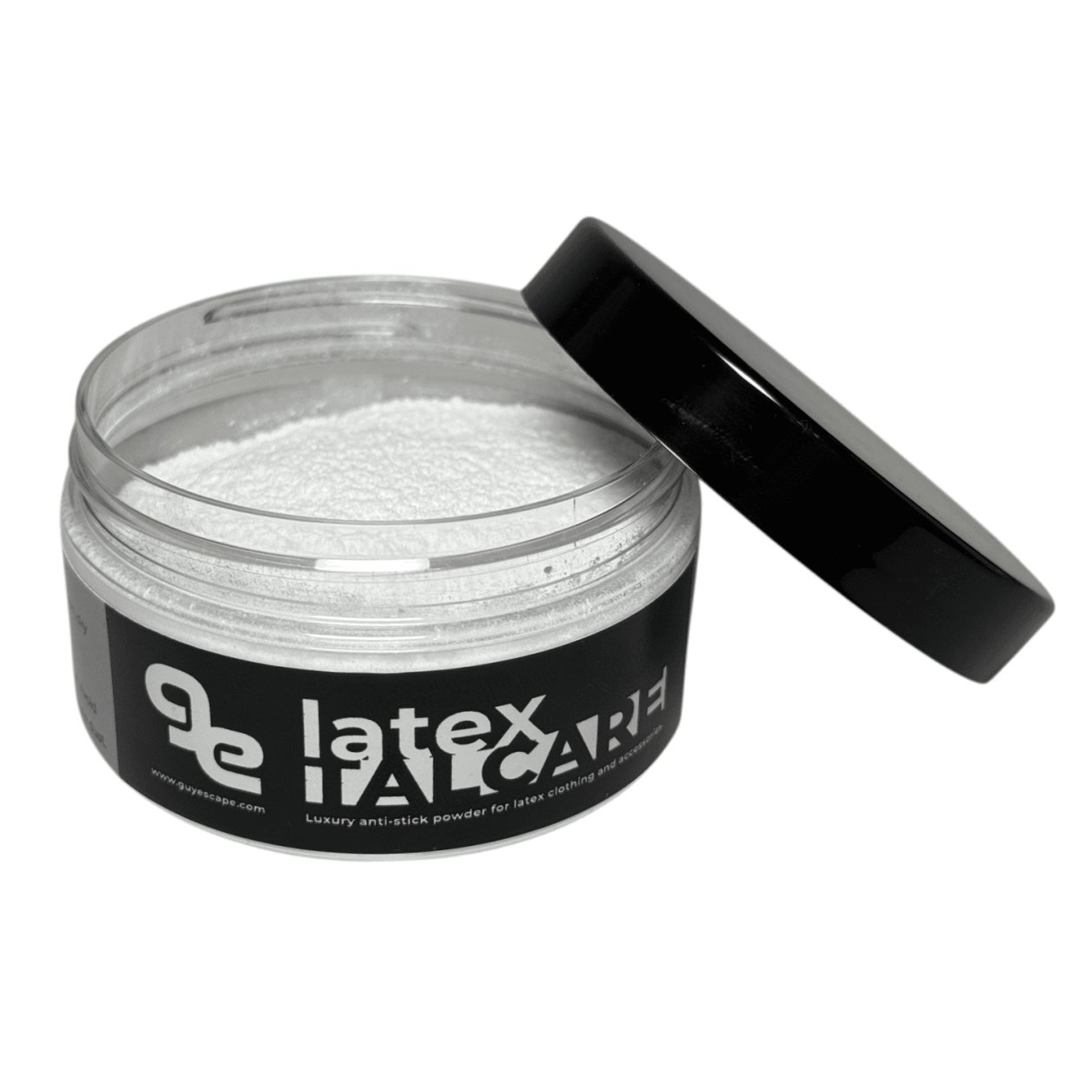
Our Latex Talcare powder (50g) is a professional-grade anti-stick powder formulated to the same high-purity standard used in medical applications:

• Prevents sticking — stops latex layers from bonding or melting together during storage.

• Easy application — creates a smooth, friction-free barrier so gloves glide on seamlessly.

• Material-safe — free from oils, perfumes, and additives that can damage delicate latex over time.

• Protects against wear — helps guard against sweat, moisture, and premature deterioration.

Latex Talcare premium anti-stick powder for latex 50g product photo
Latex Talcare
Premium Anti-Stick
Powder for Latex 50g

Protect your luxury latex wardrobe with Latex Talcare.

How to apply latex talc

1. Make sure the gloves are clean and completely dry before applying powder.

2. Turn the gloves inside out if you want to powder the inner surface as well as the outer surface.

3. Sprinkle a light, even layer of talc over the latex surface.

4. Gently rub or shake the gloves so the powder distributes evenly, then remove any excess.

5. Store the gloves flat or loosely folded in a cool, dry place, away from direct sunlight and heat.
Reapply talc periodically, especially before storage or if the surface starts to feel tacky again. 
Talc vs silicone:
which do I need?

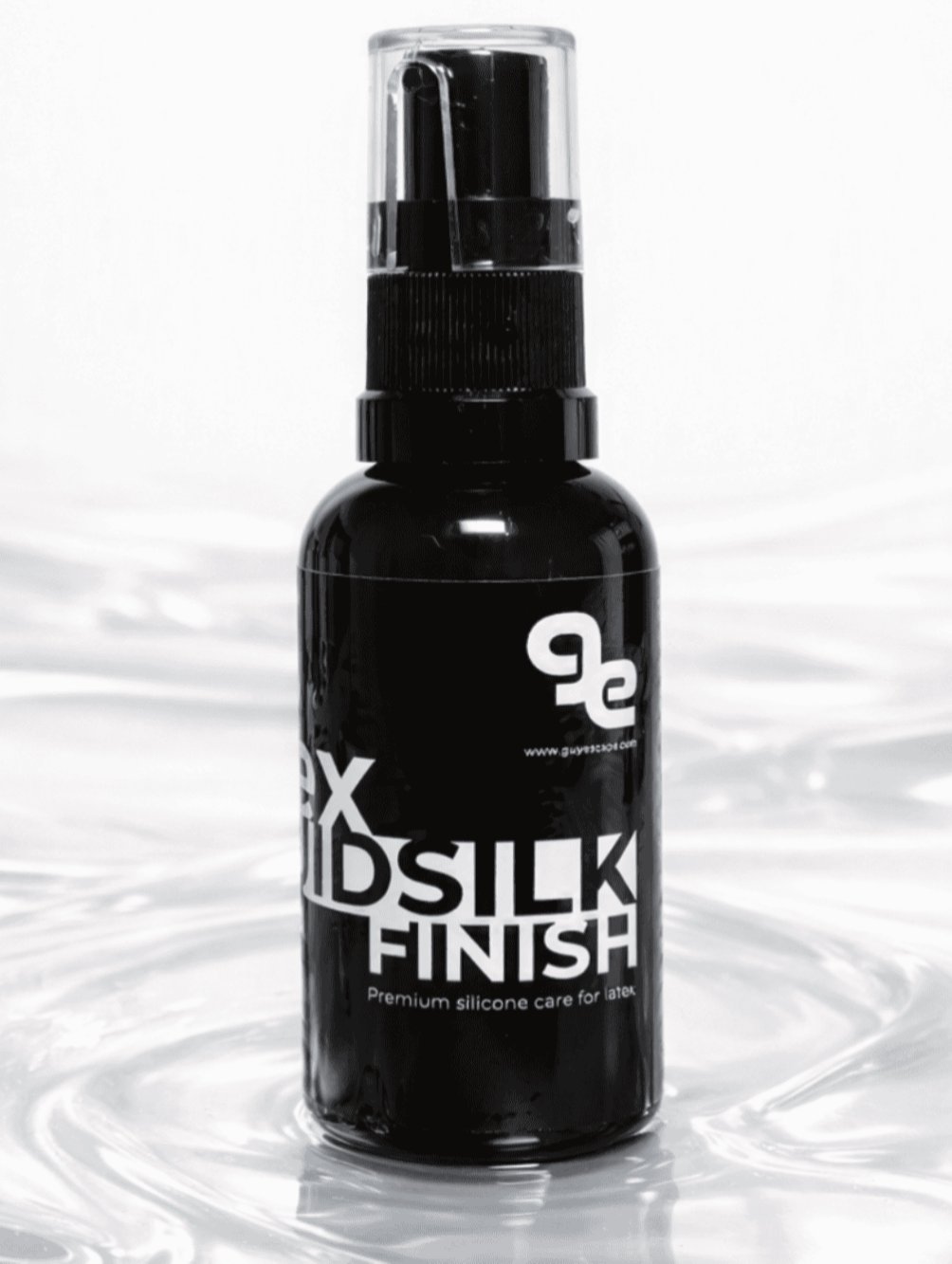
Use Latex Talcare powder (see above) for anti-stick storage protection, and LiquidSilk Finish when you want a polished, glossy look for wearing. The two products work well together as part of a full care routine.
Shop LiquidSilk Finish at guyescape.com (available in 10ml, 50ml, and 100ml).

LiquidSilk Finish premium silicone care for latex product photo
LIQUIDSILK FINISH
Premium Silicone Care
for Latex

LIQUIDSILK FINISH is a premium surface treatment developed specifically for latex gloves and latex garments.